Aaron Blaise on Animation

1 Comment
A still from Mulan (1998)

Welcome! We’re here with a new Sunday issue of the Animation Obsessive newsletter. This is the plan:

  • 1) The creative process of Aaron Blaise.

  • 2) Animation newsbits.

Now, let’s go!

1 – A Disney legend

In the ‘80s and ‘90s, Disney animation came back. Viewers got excited about the films again: this stuff was more ambitious, more relevant. Beauty and the Beast and The Lion King didn’t feel like The Black Cauldron. The press was talking about a “Disney renaissance” as early as 1988.1

The renewed energy in Disney’s movies had many causes. For one, computers started to reshape its process. The new management played in, too. When Eisner took over, he noted that the company couldn’t “rely on the Disney name and reputation alone” to appeal to the “tastes of a new generation.” His regime left room for fresh ideas.2

Even more important, though, was the team. The Nine Old Men passed the reins to younger artists — like animator Glen Keane. Their role was to continue Disney’s tradition beyond where it’d been. If they failed, the tradition failed with them.

Back then, Aaron Blaise stood among the new people — the ones who made the renaissance happen. He joined Disney in the late ‘80s and climbed quickly. You’ve seen his work: he was an animator on the Beast and supervised the tiger in Aladdin, plus characters in Lion King and Mulan. Eventually, he became one of the two Brother Bear directors.

Blaise is an artist steeped in the Disney school. His gold-standard animators include Glen Keane and Mark Henn (his mentors), Andreas Deja and the Nine. He describes James Baxter as “one of the best animators who’s ever lived” and someone “up there with the Milt Kahls of the world.” And, although he left Disney years ago, Blaise carries its style with him and continues to teach it.3

You find that style in his recent film Snow Bear — currently getting Oscar buzz.

Earlier this week, Blaise spoke to our teammate John via Zoom. He went deep into his approach to animation, and into how intensely, personally meaningful the Snow Bear project has been for him. Their chat (edited for length, clarity and flow) appears below.


John (Animation Obsessive): I guess my first question is, what does a piece of animation need for you to look at it and think, “That’s good animation”?

Aaron Blaise: For me, it’s when that character is alive. And alive doesn’t mean just moving around — you know, really good movement. Alive, to me, is when a character emotes. When a character is thinking. When a character is going through emotional changes, when they’re struggling, they’re happy, they’re angry.

When the viewer forgets that they’re watching drawings, and they get immersed in the acting and the story, that’s when you have great animation. You want your audience to not think about the art, to not think about how they’re looking at pencil or stylus lines on the screen. You want them to be immersed in that character.

If you can achieve that, then you’ve done your job.

A pencil test by Blaise for The Legend of Tembo, courtesy of The Art of Aaron Blaise

John: Has that definition changed for you over time?

Aaron: That’s how it’s evolved. It’s funny; when I first came into animation, I never had the intention of becoming an animator. When I went to art school, I wanted to be an illustrator. I wanted to work for National Geographic. My big dream was nature- and natural-history-type illustration. Then I had this opportunity to get an internship with Disney back in the mid-‘80s.

At the time, I thought animation was all about drawing and moving characters around on the screen. We all made little flipbooks when we were kids, and that’s what I thought it was.

[I looked at it that way] until I started with Disney and I was working with Glen Keane, who trained me, and Mark Henn, and a lot of the animation greats through the years. And it also came down through the original Nine Old Men. One of the great quotes by Ollie Johnston was, “Don’t animate what a character is doing; animate what they’re thinking.” That’s gonna dictate what they do, how they do it, everything else.

Over the years, that really has sunk in with me. [It’s] much like music. A young guitarist (I love to play guitar) wants to play every note, right? To show off prowess. It’s not until you mature as a musician that you realize, a lot of times, if not all the time, it’s not what notes you play, but the notes you don’t play. It’s the spaces in between. And animation is that same type of thing.

As I matured as an animator, I realized that it wasn’t so much about how well I moved stuff around — although that’s part of it. It’s how well you get the character to emote. Sometimes, it’s not moving at all. Sometimes it’s a look, or a tilt of the head, and that’s all it needs.

Those are the things you gain as an animator. You get that confidence. Young animators feel like they need to move everything around to show how good they are. If they’re not moving it around, they get a little insecure. But it actually goes the opposite way as you mature.

Blaise animation for the Beast, courtesy of The Art of Aaron Blaise

John: That’s a fantastic answer. So, you mentioned some of your mentors. Were there a few pieces of advice you picked up from the people who helped to shape your approach?

Aaron: Yeah. You know, it’s what we were just talking about — to me, those are the biggest fundamentals for animation. Animate what your character is thinking; not what they’re doing.

Then, from a practicality [standpoint]… Glen Keane is one of the great contemporary animators. He won the Oscar for Dear Basketball, and he’s the creator of the Little Mermaid, and the Beast, and Tarzan. All these wonderful things. And he’s this very immersive animator. He feels everything that he animates.

When he’s animating the Beast, his face contorts, and he gets really energetic with his pencil lines. And that really eked its way into how I draw as well. He got me to loosen up. He got me to feel that acting. It goes down your arm and through your hand and onto the paper and onto the screen. (Nowadays, it’s not paper anymore [laughs].)

It becomes, like I was saying earlier, more than just drawing. Especially in that rough animation, before it’s cleaned up, you can see that energy in every single drawing he does. And that comes across on the screen when you play them sequentially. It’s really inspiring.

John: You mentioned your background a little bit earlier. What was it, exactly, that drew you to animation?

Aaron: I grew up in South Florida in the Everglades. I loved running through the woods, chasing animals, tracking animals. You know, I was Calvin from Calvin and Hobbes [laughs]. I was always out in the woods and getting dirty, and I always had a sketchbook, drawing animals. I’ve always been obsessed with nature, wildlife.

As I grew as an artist, that’s what I wanted to depict: the natural world and, specifically, animals. To me, they’re fellow earthlings. They’ve got as much soul to them as we have. I can feel it, and I wanted to depict it.

Blaise’s first animation test for young Nala from The Lion King, courtesy of The Art of Aaron Blaise

I wanted to do that as a painter and an illustrator. But, when I discovered animation in college, I realized, “Oh, my gosh. I can go beyond the paintbrush. I can bring these characters, literally, to life on the screen.” I felt like Dr. Frankenstein. That, to me, was incredible and addicting. It’s like a drug! You lose time; you just get immersed in that world.

It’s a wonderful medium, because it encapsulates drawing, painting, music, acting, staging. If you get the hang of it, and it gets under your skin, you can’t get rid of it. That’s what happened to me when I was 19 years old. I’m 57 now, and I get just as giddy when I sit down every morning to animate as I did at 19. It’s great.

John: Let’s say you’re starting to animate a scene. You’re trying to figure out how to position everything, how things should progress from one part to the next. What’s going into your drawings, step by step?

Aaron: Creating an animated film is, like you said, a step-by-step process. When I’m writing a story, when I’m creating an animated film — like Snow Bear, for instance — it starts with an idea.

It literally started as I was washing my hair in the shower. It was, “I want to animate a single character in a simple environment.” And that evolved to, “How about a polar bear in the Arctic? Because that seems simple.” (Ultimately, it wasn’t [laughs].) Which evolved to, “I’m gonna write a treatment for this.” The one-sentence logline: a lonely polar bear in the Arctic can’t make any friends, so he makes a snow bear to keep himself company. How do I flesh this out? What are the steps that he goes through?

Once I get that [ready], I don’t sit down and start animating right away. I’m storyboarding. I’m figuring out the staging, what kind of camera shot I want, where I want the character in this shot, and how it’s going to cut from shot to shot.

Storyboard panels for Snow Bear, courtesy of The Art of Aaron Blaise

By the time I get to the animation, I’ve already figured out all the different steps. I’ve got the staging, the arc of the shot. It comes down to executing it.

You’re working out smaller and smaller details as you go. It’s like building a house: you lay down that foundation, then you start doing the framework. Ultimately, you’re screwing in your outlet covers and putting the knobs on your cabinets. I’ve gone through all that broad, foundational work so that, when I sit down to animate, I’m really working out those details and having fun with it.

John: Given that you have everything planned out, how do you keep the action so spontaneous as you’re drawing the specific movements?

Aaron: When I’m storyboarding, I’m imagining all those key poses it’s gonna take to get the idea across. Sometimes it’s two or three key poses to a shot; sometimes, it’s 10. Those become my storyboards.

When I animate, I use those as my starting point, basically as the inspiration. I still immerse myself in there. I still try to feel every bit of that movement and action and emotion. There’s still spontaneity even within all that planning, but I’ve got a little bit of a roadmap for myself to get through the shot, so I’m not floundering and searching all over the place.

Imagine a stage play. They’ll do tons of stage rehearsals, but when they do the opening night, it’s still gonna feel spontaneous. It’s very much the same thing.

Some of Blaise’s thumbnail sketches from the Beauty and the Beast bandaging scene, courtesy of his Twitter account

John: That makes perfect sense. So, as you started at Disney, do you remember the first piece of animation where you felt like you were getting the hang of it? A character or a scene?

Aaron: Yeah, I do. My entry level was in the cleanup department. I would get the rough animators’ drawings, and it was my job to redraw them and clean them up to the nice, pristine line that could be painted and colored and filled in. I worked under a guy named Mark Kausler on a Roger Rabbit short called Roller Coaster Rabbit. It was released with the live-action Dick Tracy.

What was interesting was, when I interned to become an animator, my internship was only six weeks. I was an illustrator; I knew nothing about animation. Actually, before I even started, I went back to college. Didn’t touch animation for a year, and then came back after six weeks of animation training a year earlier.

So, I struggled a little bit. But I learned a lot under Mark. I worked my way up through the ranks and became an animator after about a year, and I was brought on to Beauty and the Beast, on to the Beast unit under Glen Keane. There’s a scene… Glen really guided me along, but Belle and Beast are arguing in front of the fireplace. She’s trying to bandage him; he’s just been attacked by all these wolves. They’re [going] back and forth. It was the first time I felt like, “It’s clicking. It’s coming together.”

It was a struggle, but that was the first shot. To this day, it’s still one of my favorite shots I’ve ever done in my 38 years as an animator. That one has stuck with me.

A snippet of Blaise’s Beast animation — this sequence was a turning point for his career

John: That’s really cool. Do you have any other standout character performances you remember from the Disney days, where you’re like, “I really nailed it there”?

Aaron: Yeah. A lot of times, it’s not necessarily a performance. It might be just whatever the hurdle was in that shot.

There’s a scene in Mulan. I animated Yao, one of the gang of three, and all the ancestors — the ghosts that come to life in the pagoda behind Mulan’s house. George Takei was the voice of the main ancestor, and there’s a scene where he comes out of these stone tablets and forms out of this amorphous light.

I had no clue how I was gonna do this. It was roughly indicated in the storyboards, but they didn’t give me much to work with. So, it was a huge struggle. But I put my nose to the grindstone and, over a week or two, figured it out.

He comes to life as this big, swirling river of light, and then he forms his staff out of this mist and light and everything. I was really happy with it. Matter of fact, I got a phone call from the head of the studio after it came through dailies, because they liked it so much.

Sometimes, it’s getting over a hurdle like that. You have no idea how you’re gonna do something and, a couple of weeks later, you come out the other side. Those kinds of shots stick with you.

The shot from Mulan

John: You started out at Disney right around the time that the studio was transitioning over to CAPS. As someone who knew the old-school process, what was that like?

Aaron: It’s interesting, because CAPS didn’t affect me in the way that you might think. It became a compositing tool and a painting tool: the character color, the backgrounds. It created multiplane effects. But, as a rough animator, it didn’t affect me at all. Before CAPS came along, we were animating on paper; and, after CAPS came along, we were still animating on paper.

Where the tool really took effect was after the animation was cleaned up, which was done on paper as well. I took those rough drawings and handed them off to assistants, who went through and redrew every single drawing that I’d done. I never had one of my drawings up on the screen in any of the films I worked on for Disney. I had my acting up on the screen, but all of my drawings were redrawn. Every rough animator was that way. Those [cleaned-up] drawings got scanned into the CAPS system.

The backgrounds would be digitized as well, and everything was digitally composited together. The advantage that gave you was, first of all, it sped the process up. And you could build an infinite number of layers. The advent of CAPS didn’t affect me as a rough animator, but it really did affect the production beyond the cleanup stage.

One of Blaise’s early animation tests for Yao from Mulan, courtesy of The Art of Aaron Blaise

John: So, correct me if I’m wrong, but I think Snow Bear is your first time directing in a little while — especially for a film where you had this much of an authorial hand. I’m wondering what it was like returning to that, after all you’d learned and experienced in between time.

Aaron: Pretty intoxicating, I gotta tell you.

I left Disney back in 2010. I lost my wife to breast cancer in 2007, and I struggled a lot after that at Disney — to the point where I needed to leave and figure things out for myself. I thought that was the end of my animated filmmaking. I really lost the inspiration.

I’m from Florida; I ended up transferring to California, where I lost my wife Karen. Then I came back to Florida to find myself again, and I actually started with another [animation] company here. That company went bankrupt while I was working for them. At that point, I thought, “You know what? I’m not going to be doing animation anymore.”

But I did want to do art. I found that drive again, and I started my art and animation education business — that’s what I’m doing now. I’d nurtured that with my business partner, Nick Burch, for about 10 years when I started getting the itch to create films again.

I thought, “I’m training people in art and animation. Why don’t we do a short, and we’ll create a course on how to create your own animated short?” [laughs] But we had to do a short to do that. That was where it started. As I got into it, and it grew and blossomed, I really, really fell in love with animated filmmaking again.

Also, it was during that time I met my business partner’s sister-in-law — his wife’s sister. And, lo and behold, we fell in love. We got married, and I’m remarried now. So, Snow Bear became this metaphor of the last 18, 19 years of my life. Of loving and losing and struggling and being adrift, and then finding something again.

That was a long-winded answer to, “How’s it feel to be directing again?” It feels great! [laughs]

Early test animation for Snow Bear, courtesy of Aaron Blaise

John: That’s incredible. What was it like seeing Snow Bear finished for the first time?

Aaron: It was an incredible sense of achievement. Even more than the features I’d been part of at Disney. I loved working at Disney; I loved being a part of The Lion King, Beauty and the Beast and Pocahontas and Mulan. Being on those crews, and crossing the finish line on each of those films, was a huge sense of accomplishment.

But there was something even more satisfying — even with a short film like Snow Bear — in knowing that, visually, I created everything myself. I’ve always wanted to make my own film.

On the sound side, I teamed up with Mark Mancina and Marlon Espino; they composed the score. I had some wonderful Foley people with John Roesch and Charles Kohlmyer. Max Smith from Skywalker, who did all of the post-production and sound mixing. Those guys were amazing.

After I finished the visuals, and worked with them to finish the sound, I had to pinch myself. I couldn’t believe it. It was the biggest sense of accomplishment I’ve had in my career, ever. Especially having gone through the emotional ups and downs over the last 20 years. Being able to come out the other side, and express all of that through story and metaphor, was very, very cathartic.

John: What do you hope people take away from Snow Bear?

Aaron: First of all, I want them to be entertained. So often, we watch films and rule number one gets ignored, and that’s to entertain the audience.

I think, a lot of times, filmmakers get really indulgent. You can make your own film — that’s great. If you want to sit in your own room and watch it and love it, that’s great. But, ultimately, we as filmmakers make our films because we want to put it out to the public, and we want people to enjoy it.

A key animation test for Snow Bear, courtesy of Aaron Blaise

So, you have to remember that it’s gotta be — for lack of a better way of putting it — universal. It doesn’t have to be all rainbows and hearts and everything else [laughs]. But you want to keep people interested, on the edge of their seat, laughing, crying, angry. Whatever it is, you want them to have entertainment.

So, that’s the first thing I want with Snow Bear. Even though it’s an 11-minute film, I want them to be sucked in. I want them to laugh and cry and feel joy, and come out the other side of it happy that they watched it.

John: I guess my final question is — obviously, your main job now is teaching. But are you planning to do any more animation, another film or anything like that?

Aaron: Oh, yes. I’m hooked. I’ve already written three treatments for features — one of them is a prequel to Snow Bear. I’ve got four different shorts written out in some form or another. I’ve got series ideas [laughs]. I’ve got all kinds of stuff!

So, all Snow Bear did was reignite the flame. Now, it’s a fuse burning to a giant box of TNT [laughs]. I’m ready to go.

2 – Newsbits

  • In Latvia, director Gints Zilbalodis (Flow) announced his completion of the screenplay for his next feature, Limbo.

  • A short, mesmerizing animation promotes a new track by Oneohtrix Point Never. It comes from artist Elliott Elder, based in Britain. (Thanks to the team at re:frame for putting this one on our radar.)

  • PBS and its member stations in America are scrambling for ways to survive after the government cut their funding. However, PBS head Paula Kerger says that the fight to win back federal support is “not over.”

  • In Russia, Yakut animation was recently on display at the festival TO:KU, held in Yakutsk. The region is investing in animation as part of a larger economic growth plan.

  • In Czechia, the series About Doggie and Kitty debuts later this month. It adapts classic children’s literature from the country, previously animated in the ‘50s.

  • The Lagos Animation Festival took place in Nigeria. Among the winners: Hadu by Damilola Solesi, The Travails of Ajadi by Adeoye Adetunji and more.

  • Arco opens in France on October 22, following its big win at Annecy. Director Ugo Bienvenu talked about the process and influences behind the film.

  • Meanwhile, in Mexico, I Am Frankelda will hit a reported 500 theater screens on October 23. (The film’s stateside premiere occurred today at Animation Is Film.)

  • In America, Infinity Castle became the highest-grossing foreign film ever, defeating Crouching Tiger, Hidden Dragon.

  • Last of all: we explored two competing outlooks on animation, held by Norman McLaren and Mamoru Oshii.

Until next time!

1

See The Northern Echo (December 3, 1988).

2

From Michael Eisner’s first letter to Disney shareholders in 1984.

3

Quotes from our conversation with Blaise.

Read the whole story
jlvanderzwan
4 hours ago
reply
Blaise uploaded Snow Bear a few days ago so you can watch it here for free, by the way: https://www.youtube.com/watch?v=xOXolSQcEb4
Share this story
Delete

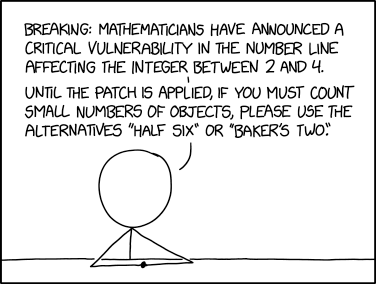
Website Task Flowchart

3 Comments and 7 Shares
Tired of waiting on hold? Use our website to chat with one of our live agents, who are available to produce words at you 24/7!
Read the whole story
jlvanderzwan
15 hours ago
reply
Was todays xkcd written by 100R?
Share this story
Delete
2 public comments
macr0t0r
15 hours ago
reply
That's a perfect description of AI chat agents: "who are available to produce words at you 24/7"
alt_text_bot
16 hours ago
reply
Tired of waiting on hold? Use our website to chat with one of our live agents, who are available to produce words at you 24/7!

The Dread Pirate Robert Nozick

1 Comment
PERSON:
Read the whole story
jlvanderzwan
15 hours ago
reply
Wow, did a quick search on the guy and I don't think I've ever seen a philosopher with a more punchable face.
Share this story
Delete

1336: This is About Writing This

1 Comment
http://www.giantitp.com/comics/oots1336.html
Read the whole story
jlvanderzwan
15 hours ago
reply
> almost at the montage event horizon
… he said just before this strip hits #1337
Share this story
Delete

Saturday Morning Breakfast Cereal - Construction

1 Comment and 2 Shares


Click here to go see the bonus panel!

Hovertext:
I had a note to myself for about year about someone insisting gender is constructed with lasers, and then suddenly here we were.


Today's News:
Read the whole story
jlvanderzwan
22 hours ago
reply
René
Share this story
Delete

Saturday Morning Breakfast Cereal - Vat

1 Comment and 2 Shares


Click here to go see the bonus panel!

Hovertext:
More parsimonious is that you're just a brain in a sous vide.


Today's News:
Read the whole story
jlvanderzwan
2 days ago
reply
Could the whole Boltzman brain paradox be as dumb as the same paradoxes that arise when applying reasoning in finite sequence terms about infinite sequences? (our finite lived experience vs the universe)
Share this story
Delete
Next Page of Stories